


Transform Your Business with Cloud-Based Software

What is Cloud-Based Software?
Cloud Based Software is software hosted on remote cloud servers and accessed through the internet instead of being installed on local company systems.
- How it Works: Applications and data are stored online, giving authorised users secure access across devices and locations.
- What Differs: Unlike on-premises software, it reduces reliance on local hardware, manual updates, and infrastructure management.
- Business Benefits: It supports scalability, remote collaboration, business continuity, easier updates, and more flexible digital operations as needs change.
How does Cloud Based Software work?
Cloud Based Software operates through secure internet-connected infrastructure rather than relying on local systems alone. The process typically follows three steps:
- Data is captured from connected devices, systems, or user inputs and sent securely to the cloud.
- Cloud resources process, store, and analyze the data to support applications, workflows, and business decisions.
- Updates, insights, and actions are delivered automatically, helping teams respond faster, reduce manual intervention, and keep operations current.
What are the Key Features of Cloud-Based Solutions?
Scalability | Adjusts resources as demand changes without major hardware upgrades. |
Security | EcoStruxure cloud platforms support secure access, data protection, and compliance. |
Real-time monitoring | Tracks system health and performance for faster decisions. |
Integration | Connects cloud, on-premise, and hybrid environments. |
AI and automation | Turns data into insights and automates routine tasks. |
Remote access | Enables secure system management across locations. |
Why is Cloud-Based Software Important for Modern Businesses?
Cloud Based Software is increasingly important for modern businesses because it provides scalable access to applications, data, and services without relying on extensive on-premises infrastructure. It helps organizations improve agility, support remote operations, simplify software updates, and maintain business continuity. By reducing infrastructure complexity and enabling secure access across locations, cloud software can support more efficient operations and long-term digital growth.
Cloud Based Software also accelerates innovation by giving businesses access to real-time data, analytics, automation, and connected digital services. Schneider Electric integrates cloud capabilities with EcoStruxure to strengthen digital energy management across buildings, facilities, and industrial operations. This approach helps organizations monitor energy use, optimize performance, improve operational visibility, and advance digital transformation with greater flexibility and control.
The Advantages of Using Cloud-Based Software
Cloud-based software delivers a wide range of advantages that help modern businesses operate more efficiently, adapt faster, and stay competitive in an increasingly digital and distributed world. By moving applications to the cloud, organizations reduce the burden of managing physical infrastructure while gaining greater flexibility, stronger security, and real-time access to critical systems.
Some of the key advantages include:
- Lower Operational Costs: Cloud platforms eliminate the need for expensive hardware, manual updates, and on-site maintenance. Businesses pay only for what they use, improving budget control.
- Enhanced Collaboration: Teams can access applications and shared data from any location, enabling smoother coordination across offices, job sites, manufacturing plants, or remote environments.
- Stronger Security: Leading cloud providers offer advanced encryption, identity management, and continuous monitoring to protect sensitive information across distributed operations.
- Greater Scalability: Cloud-based systems expand instantly as workloads grow, ensuring consistent performance during peak demand without additional hardware investments.
- Higher Uptime and Reliability: Automated updates, built-in redundancy, and centralized management reduce downtime and improve business continuity.
- Real-time Insights and Efficiency: Integrated analytics tools help businesses monitor system performance, energy usage, and operational trends, enabling more proactive management.
- Faster Innovation: Cloud environments support rapid deployment of new features, integrations, and digital initiatives without disrupting daily operations.
Together, these advantages make cloud-based software an essential foundation for digital transformation and long-term operational resilience.
How to Choose the Right Cloud-Based Software for Your Business
Choosing the right Cloud Based Software is a strategic business decision because it affects how efficiently an organization can scale, operate, and adapt.
- Cost Optimization: Reduce infrastructure and lifecycle costs.
- Operational Efficiency: Centralize data, automate workflows, and improve visibility.
- Collaboration: Connect teams and systems through shared, secure information.
- Sustainability: Track energy use and improve resource efficiency.
EcoStruxure brings all four capabilities together in one integrated platform, helping businesses simplify operations, improve performance, and support long-term digital transformation.
Cloud-Based Energy Management Made Simple with EcoStruxure™ Energy Hub
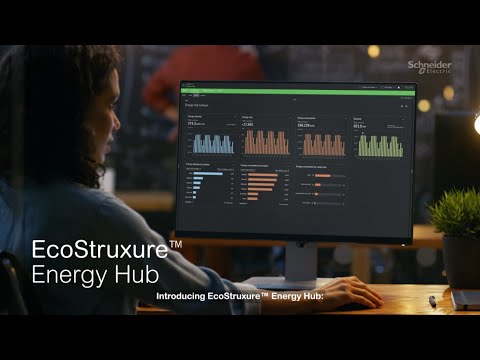
Schneider Electric's cloud-based EcoStruxure™ Energy Hub simplifies electrical and energy management, helping buildings meet compliance, sustainability, and reliability goals.
Need help?
Product Selector
Quickly and easily find the right products and accessories for your applications.
Get a Quote
Start your sales enquiry online and an expert will connect with you.
Where to buy?
Easily find the nearest Schneider Electric distributor in your location.
Help Centre
Find support resources for all your needs, in one place.
What is cloud-based software, and how does it work?
Cloud-based software delivers applications over the internet, allowing businesses to access tools without local installs. It works by storing data and running processes in secure cloud environments. Schneider Electric enables this with reliable, scalable, and integrated digital platforms.
What are the types of cloud based software?
Cloud based software includes Software as a Service (SaaS), Platform as a Service (PaaS), and Infrastructure as a Service (IaaS). Businesses can also use public, private, or hybrid cloud models depending on control, security, scalability, and operational needs.
What is the difference between public, private, and hybrid cloud?
A public cloud uses shared infrastructure managed by a third-party provider, while a private cloud is dedicated to one organization. A hybrid cloud combines both models, allowing businesses to balance scalability, control, security, and workload requirements.
How does cloud based software contribute to sustainability?
Cloud based software can support sustainability by improving resource utilization, reducing dependence on on-site hardware, and enabling centralized energy and performance monitoring. Scalable cloud services can also help businesses avoid overprovisioning infrastructure.
How is cloud-based software different from on-premise software?
Cloud software runs online with remote access, automatic updates, and flexible scaling, while on-premises software requires local servers and manual maintenance. Schneider Electric’s cloud platforms reduce complexity, strengthen security, and support enterprise-wide connectivity.
Is cloud-based software secure for enterprise use?
Yes, cloud software is secure when backed by advanced encryption, identity controls, and continuous monitoring. Schneider Electric delivers enterprise-grade protection with strong cybersecurity, compliant architectures, and secure digital environments for critical operations.
What is SaaS and how does it relate to cloud based software?
Software as a Service (SaaS) is a cloud delivery model that provides access to applications over the internet, typically through a subscription. It is one type of cloud based software and can reduce the need for local installation, maintenance, and infrastructure management.
Can cloud based software work without internet?
Cloud based software generally relies on internet connectivity to access hosted applications and data. Some solutions offer limited offline functionality with local caching or synchronization, but full features, real-time updates, and remote collaboration usually require a connection.
How long does it take to migrate to cloud based software?
Cloud migration timelines vary by system complexity, data volume, integrations, security requirements, and testing needs. A simple deployment may take weeks, while larger enterprise migrations can take several months and are often completed in phases to reduce operational disruption.