


Edge Computing
Distributed IT
Improve reliability and fasten response times by combining cloud with edge infrastructure.

Edge computing plays a growing role in modern digital infrastructure by processing data closer to the source rather than relying entirely on centralized data centers. This approach enables real-time data analysis, which is critical for time-sensitive operations. It supports faster decision-making and system responsiveness. Edge computing is important in environment powered by the Internet of Things (IoT), where connected sensors and devices continuously generate large volumes of data.
What Features Enable Incremental Edge Deployment?
Edge computing processes data close to where it is generated instead of sending everything to distant cloud servers. Data from devices, sensors, and connected machines is first collected by edge devices or local gateways installed within the network. These systems perform immediate processing, filtering, and analysis before transmitting only relevant information to central platforms or cloud infrastructure. By handling critical workloads locally, edge computing significantly reduces latency and network congestion. This enables faster insights, real-time responses, and more reliable performance for applications such as industrial automation, and connected digital infrastructure.
Challenges of edge solutions

Improved resiliency
AI and digital transformation enable scalable and modular operations.

Increased security
Ensure robust security and data centric management systems.

Energy efficiency
Optimise energy use, ensure regulatory compliance, and reduce carbon footprint.

Experts' access
We maintain and modernise your assets for safe 24/7 operations.
Edge computing solutions


White papers
Sustainability at the edge
Ensure a resilient, secure, and efficient network and achieve sustainability goals with our solutions and experts.
How Does Edge Computing Support IoT and Smart Devices?
Edge computing is fundamental for IoT and smart devices, as it allows for local data processing and analysis. This reduces the reliance on cloud connectivity, enabling faster response times and improved reliability.
Smart devices can process sensor data locally, making immediate decisions without the need for constant communication with a central server. This is vital for applications like smart homes, industrial IoT, and autonomous vehicles, where real-time data processing is essential. Edge computing also enhances security by keeping sensitive data within the local network.
Explore our latest insights on edge computing
Learn more about our edge solutions from our knowledge networks resources.


_BUILDER.IORectangle.webp)


.webp)


You may also be interested in


Need help?
Product Selector
Quickly and easily find the right products and accessories for your applications.
Get a Quote
Start your sales enquiry online and an expert will connect with you.
Where to buy?
Easily find the nearest Schneider Electric distributor in your location.
Help Centre
Find support resources for all your needs, in one place.
Frequently Asked Questions
How is Edge Computing different from Cloud Computing?
Edge computing differs from cloud computing in data processing. Cloud computing stores and analyzes data in centralized servers, while edge computing processes data near its source. This minimizes latency, improves real-time decision-making, reduces bandwidth use, and enhances overall security.
What are the main use cases of Edge Computing?
Edge computing powers use cases like autonomous vehicles, smart cities, healthcare monitoring, and industrial automation. It processes data near sensors for faster insights, reduces latency in IoT applications, improves reliability, and enables real-time decision-making across connected systems.
How does Edge Computing improve AI and ML?
Edge computing enhances AI and ML by processing data locally, reducing latency, and enabling faster model inference. It allows real-time analytics, continuous learning, and improved privacy by keeping sensitive data close to its source, leading to quicker and more efficient decision-making.
What role does Edge Computing play in 5G?
Edge computing plays a vital role in 5G by bringing data processing closer to users and devices. It reduces latency, boosts network efficiency, and supports real-time applications like autonomous driving, AR/VR, and IoT by enabling faster, more reliable connectivity through localized data handling.
What are the security risks of Edge Computing?
Edge computing faces security risks such as data breaches, device tampering, and weak encryption. Since data is processed across multiple edge nodes, it increases vulnerability to attacks, unauthorized access, and malware, making strong authentication and endpoint protection essential for safety.
How does Edge Computing support predictive maintenance?
Edge computing powers predictive maintenance by processing machine data in real time to detect irregularities and predict breakdowns. By analyzing data locally, it reduces latency, prevents costly downtime, improves equipment reliability, and helps industries plan maintenance more efficiently.
What are the limitations of Edge Computing?
Edge computing has limitations like high setup costs, limited storage, and maintenance challenges. Managing multiple edge devices increases complexity and security risks. It also depends on strong network connectivity, making scalability and consistent performance difficult across diverse locations.
What should a small or medium business consider when choosing edge devices and edge network solutions?
For SMBs, selecting the right edge devices and network solutions requires evaluating five criteria before procurement:
1. Workload type: AI inference workloads demand GPU-enabled edge nodes, while data aggregation and IoT gateway applications can run on lower-power compute modules.
2. Connectivity reliability is key: Realiable connection is essential in SMB edge deployments thus it is essential to look for devices with local processing capability with store-and-forward functionality so operations continue during connectivity interruptions.
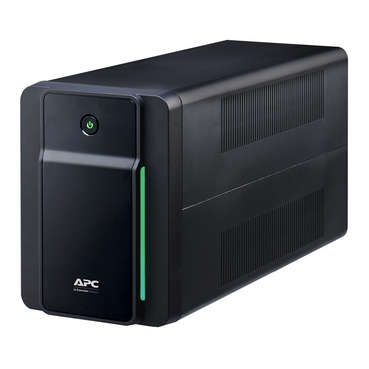
3. Power availability and quality at the edge site: Many SMB locations, warehouses, clinics, retail units, experience voltage fluctuations that damage sensitive edge hardware. Devices should be paired with a UPS that provides surge protection and automatic voltage regulation (AVR), ensuring clean sine wave power regardless of grid conditions.
4. Physical environment: The environment shapes form factor decisions. An edge node in a climate-controlled server room can use a standard rack-mount unit. One deployed in a factory floor, outdoor cabinet, or space-constrained back office needs an enclosure rated for temperature, humidity, and physical access control.
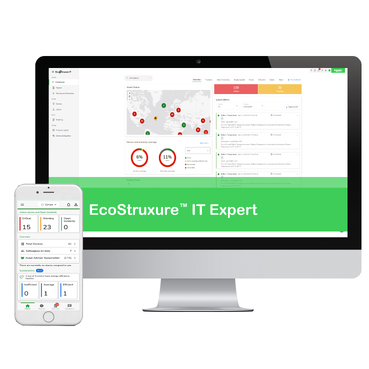
5. Management and monitoring capability: Edge deployments across multiple sites require centralised visibility, choose devices and network solutions that integrate with a DCIM or remote monitoring platform so your IT team can manage the entire estate from a single dashboard without requiring on-site visits.
Which racks, power protection, and precision cooling systems are recommended for small edge server rooms?
A small edge server room, typically supporting 2–10 racks at sub-10kW density, requires three infrastructure components sized and specified for that environment rather than scaled down from enterprise data center designs.
Racks: For small edge server rooms, 42U NetShelter SX enclosures with integrated aisle containment provide the right combination of physical security, cable management, and airflow control. Wall-mount and compact floor-standing options suit space-constrained deployments in branch offices or retail back rooms where a full rack row is impractical.
Power protection: Online double-conversion UPS is the recommended topology for any rack containing servers or NAS storage, because it eliminates the transfer time risk that line-interactive units carry during switchover, look for online protection and automatic voltage regulation across 160V–285V input which is critical for Indian locations with voltage instability, and PowerChute software integration for graceful automated shutdown.
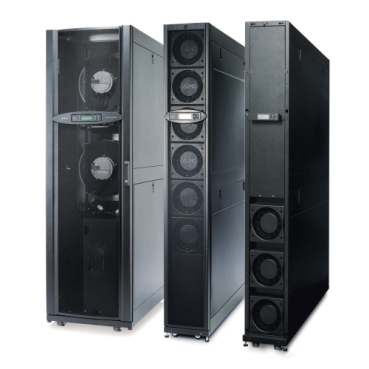
Precision cooling: Small edge server rooms below 10kW are best served by InRow DX cooling units in an N+1 configuration, which provide row-level heat removal without requiring raised floors or extensive civil work.
What is Edge Computing?
Edge computing brings computation and data storage closer to data sources, reducing latency, improving real-time responsiveness, and conserving bandwidth. It's crucial for applications like autonomous vehicles, industrial automation, and IoT devices. By processing data at the network's edge, it enhances efficiency, reliability, AI inference, remote visibility, power efficiency, and IT sustainability.
What are the Benefits of Edge Computing?
•Reduced latency and improved real-time performance.
•Decreased bandwidth usage and network congestion.
•Enhanced privacy and security through local data processing.
•Increased reliability in remote locations.
•Lower operational costs particularly when edge infrastructure is sized correctly.
•Enables rapid data processing and decision-making.
Note: Using the right-sized racks, UPS units with high energy efficiency ratings, and precision InRow cooling reduce both capital expenditure and ongoing power consumption compared to over-provisioned room-level cooling and undersized power protection that fails under load.
What is the future of Edge Computing?
Expect increased integration with AI and machine learning, wider adoption in various industries, and applications like predictive maintenance, remote patient monitoring, and real-time inventory management.
How Does Edge Computing Support IoT and Smart Devices?
Edge computing allows local data processing, reducing reliance on cloud connectivity, enabling faster response times, and improving reliability. This is vital for smart homes, industrial IoT, and autonomous vehicles, enhancing security by keeping data local.
Which platforms support incremental edge AI/IoT deployment while maintaining cost discipline and compliance?
Platforms that support modular deployment, edge-to-cloud connectivity, centralized monitoring, secure device management, and compliance-ready data controls are suitable for incremental edge AI/IoT rollout. They allow organizations to start with priority use cases, add devices gradually, and manage governance without large upfront infrastructure changes.
How do incremental deployment models help reduce costs in edge AI/IoT systems?
Incremental deployment models reduce costs by allowing businesses to scale edge AI/IoT systems in phases. Instead of investing in a full rollout at once, teams can begin with critical assets, validate performance, optimize resources, and expand based on operational value and budget readiness.
How is compliance maintained during phased edge AI/IoT expansion?
Compliance is maintained by using secure architectures, standardized device policies, controlled data access, encryption, audit trails, and documented deployment processes. During phased expansion, teams can apply the same governance framework across each new site, device, or workload to keep operations consistent and traceable.