


Intelligent operations for AI factory with AI data center software
Operate AI factories with real-time intelligence - unifying power, cooling, and IT to maximize performance, resilience, and efficiency.

AI data center operations software serves as the intelligence layer that enables operators to control, optimize, and scale AI factories in real time. As AI workloads push extreme power densities and operational complexity, intelligent systems such as Data Center Infrastructure Management (DCIM), power monitoring software (EPMS), building management systems (BMS), and digital electrical design tools for AI data centers and advanced analytics tools become essential to monitor performance, automate decisions, and maintain continuous uptime.
As part of a broader data center lifecycle software strategy, these solutions transform fragmented environments into a cohesive operational system, delivering real-time visibility, predictive insights, and automated control across power, cooling, and IT infrastructure. Learn how physical infrastructure software enables AI-ready operations in our white paper: How six AI Attributes Change Data Center Design.

Real-time operational complexity
AI factories generate vast telemetry and need near real-time data processing to manage performance, anomalies, and stability. AI data center operations software enables monitoring and faster decisions.
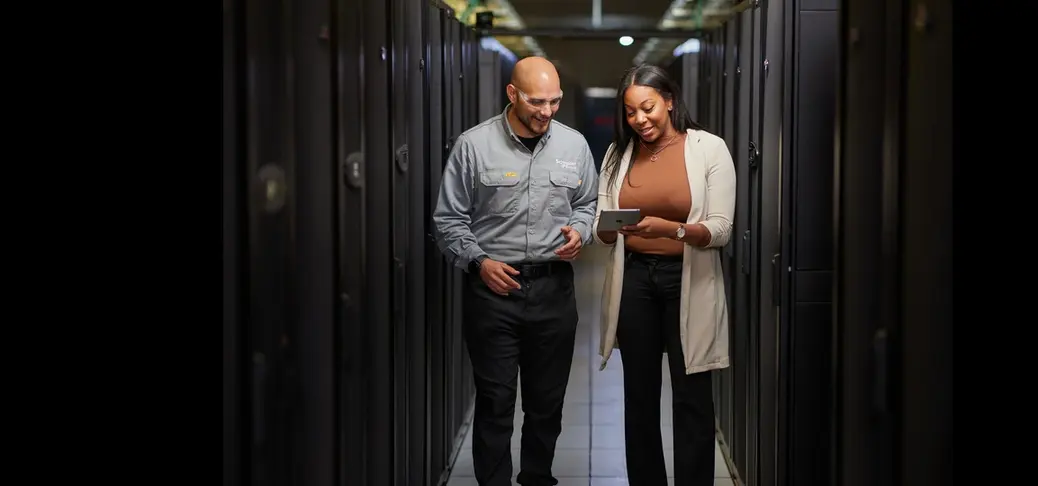

A comprehensive software platform to operate AI factories delivering real-time visibility, advanced analytics, and autonomous optimization across power, cooling, and IT.
EcoStruxure™ IT (DCIM Platform)
Comprehensive DCIM software delivering real-time monitoring, asset visibility, and operational insights across IT infrastructure and AI workloads.EcoStruxure™ Power Monitoring Expert
Real-time power monitoring and analytics software providing deep visibility into electrical distribution, helping operators ensure efficiency, reliability, and power quality across AI data centers.Frequently Asked Questions
AI data center operations software delivers real-time monitoring, control, and optimization across power, cooling, and IT systems. It provides operators with centralized visibility, actionable insights, and automation capabilities, enabling efficient management of complex AI workloads while ensuring reliability, scalability, and continuous uptime.
New and evolving data center software is central to the new era of data center development and operation. It accelerates design, enhances operations, ensures precise maintenance and drives sustainable performance. Software digitalizes the build process to improve resource efficiency, allowing you to save time, costs and energy. These innovations are especially valuable as data centers increasingly adopt AI workloads, edge computing and sustainability goals. Read The critical role of software in modern data center operations and AI infrastructure for a more detailed look.
Intelligent operations are critical for AI factories because they enable real-time monitoring, automation, optimization, and predictive management of complex AI infrastructure. AI factories run high-density AI workloads that demand continuous performance, energy, and infrastructure optimization to maintain reliability and uptime.
An AI factory software platform provides the visibility and intelligence needed to monitor operations in real time, optimize energy efficiency, improve performance, and proactively identify potential issues. This helps operators manage increasingly complex AI infrastructure while improving operational resilience, energy efficiency, and overall performance.
Discover how AI-ready infrastructure, digital twins, and energy intelligence are transforming industries in Beyond data: The rise of real-world intelligence in energy and industries. “This is a decisive decade for the invention of systems that can adapt, optimize, and endure.” — Peter Weckesser, Chief Digital Officer & Executive Vice President, Schneider Electric
Software improves uptime and resilience by enabling predictive maintenance in data centers through continuous monitoring and analytics. It detects anomalies early, identifies root causes, and automates responses before failures occur. This proactive approach reduces unplanned downtime, minimizes manual intervention, and ensures consistent performance across critical infrastructure, even under dynamic AI workload conditions. Explore how CIOs are navigating complexity, sustainability, cost pressures, and the rise of AI‑driven workloads in DCIM: the key to IT's resilient, sustainable future.
Utility power grids are also getting more dynamic, facility power distribution systems are becoming more complex, and cyberattacks threaten network stability. Addressing these challenges requires new digital tools designed specifically to enable faster response to opportunities and risks related to power system reliability and operations. Learn more in Power management for a changing world
Yes. AI data center operations software can automate monitoring, diagnostics, workflows, and system optimization using AI-assisted analytics and real-time control. By automating routine tasks and responses, software reduces manual intervention, improves response times, and continuously optimizes infrastructure performance.
For AI factories, this automation helps operators manage complex, high-density AI environments more efficiently while maintaining reliability, scalability, energy efficiency, and operational consistency.
AI-driven automation can also optimize energy consumption in real time.
In How Schneider Electric’s AI Cuts Building Energy Costs by 40% Chris Daigle, Founder of ChiefAIOfficer.com states ‘Most buildings waste 30-50% of their energy through inefficient systems that operate on fixed schedules regardless of actual usage, weather conditions, or occupancy patterns. Schneider Electric built an AI system that automatically optimizes energy consumption in real-time, reduces building operating costs by up to 40%, and manages complex energy systems autonomously while building owners and operators focus on their core business.’
Software optimizes AI infrastructure by monitoring workloads, GPU resources, power, cooling, and capacity in real time. Operational intelligence and AI-driven analytics maximize performance while aligning power and cooling with changing compute demands.
By integrating telemetry across compute, power, and cooling systems, it optimizes workload placement, predicts capacity constraints, dynamically adjusts resources, and improves energy efficiency. This results in higher infrastructure utilization, greater reliability, and lower operating costs.
In the blog The critical role of software in modern data center operations and AI infrastructure it looks at how data center automation software is evolving to reduce design and build time with lower risk while optimizing operational performance.
Building Management Systems (BMS) and Data Center Infrastructure Management (DCIM) serve complementary but distinct roles in an AI data centers. The two systems work together: BMS manages and automates a building's electrical and mechanical equipment such as HVAC, chillers, pumps, and electrical distribution and DCIM provides centralized monitoring, management, planning, optimization, and automation of the data center across IT, power, and cooling infrastructure, helping operators align resources with workload demand. Together, they enable end-to-end visibility from the building to the rack and enables optimization of AI data center performance, energy efficiency, and reliability.
Software platforms such as Data Center Infrastructure Management (DCIM), Power Monitoring Software (EPMS), Building Management Systems (BMS), and digital electrical design tools help optimize AI data centers by continuously monitoring and coordinating IT and facility infrastructure. Using real-time telemetry from compute, power, and liquid cooling systems, they align power delivery and cooling capacity with rapidly changing AI workloads. Operators can optimize workload placement, anticipate power and thermal demands, improve energy efficiency, and dynamically adjust cooling performance.
This software-driven approach helps AI Factories maximize performance, reliability, and sustainability while ensuring high-density AI clusters receive the power and cooling they need.
Infrastructure monitoring plays a key role in helping AI data centers optimize energy usage, improve asset utilization, reduce downtime risks, and streamline operations. By implementing Data Center Infrastructure Management (DCIM) solutions, organizations can gain real-time visibility into their infrastructure and identify opportunities for cost savings across distributed sites.
To learn how to quantify these benefits and build a financial business case, download Schneider Electric's white paper: Calculating ROI of DCIM Monitoring for Distributed IT Sites. The paper explains how organizations can measure cost reductions, operational improvements, and return on investment from DCIM monitoring deployments.

From grid-to-chip, chip-to-chiller, for scalable AI.
Validated AI data center reference patterns (ANSI/IEC) + selection guide.
OpenUSD digital twins with ETAP and NVIDIA Omniverse for AI infrastructure modeling.
800 VDC architectures, rack-level power, and resilient energy distribution.
Direct-to-chip, immersion, and hybrid cooling for high-density AI workloads.
Modular pods and white-space modules (time-to-ready).
Need help?
Product Selector
Quickly and easily find the right products and accessories for your applications.
Get a Quote
Start your sales inquiry online and an expert will connect with you.
Where to buy?
Easily find the nearest Schneider Electric distributor in your location.
Help Center
Find support resources for all your needs, in one place.