


The path to net-zero buildings
Why retrofit buildings?
- Buildings account for 37% of global carbon emissions, making the building sector critical to decarbonize
- 50% of existing buildings will still be in use in 2050 and must be retrofitted to achieve our climate targets
- 70% of building-related carbon emissions result from operational emissions, tied to energy consumption
Tackling dual energy and climate crises
Global electricity demand is forecast to grow almost exponentially, requiring energy generation capacity to double by 2030 and quadruple by 2040. New energy generation capacity requires significant investment in our grid, presenting a financial risk to businesses due to energy price escalations.
At the same time, 2024 was the hottest year on record. Extreme weather patterns such as flooding, hurricanes, and wildfires are already having a massive physical and financial impact, increasing risk, and are only expected to worsen.
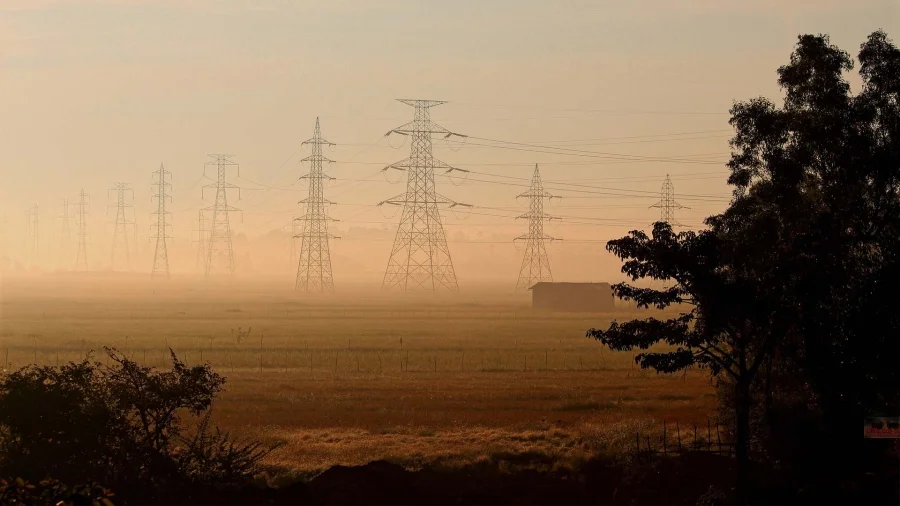
We must act on both the supply and demand side together. And buildings have a critical role to play.
Financial advantages
90% of existing buildings will pose a financial risk if they fail to decarbonize.
Most commercial building sustainable retrofits have an ROI of 10 years or less.
Stakeholder pressure
Over 11,000 businesses worldwide have set or have committed to set SBTI-validated targets, accounting for more than 40% of global market capitalization and a quarter of global revenue.
Between the end of 2023 and June 2025, the number of companies setting science-based targets grew 97%.
Regulatory compliance
10K companies will need to disclose energy and carbon under CSRD.
By 2030, over 4M buildings impacted by energy and carbon regulations.


Modernize for efficiency while maximizing ROI
It’s clear that enterprise organizations need to act faster. By 2030, we need to double our efficiency efforts and triple our deployment of renewables to be on track with global climate commitments.
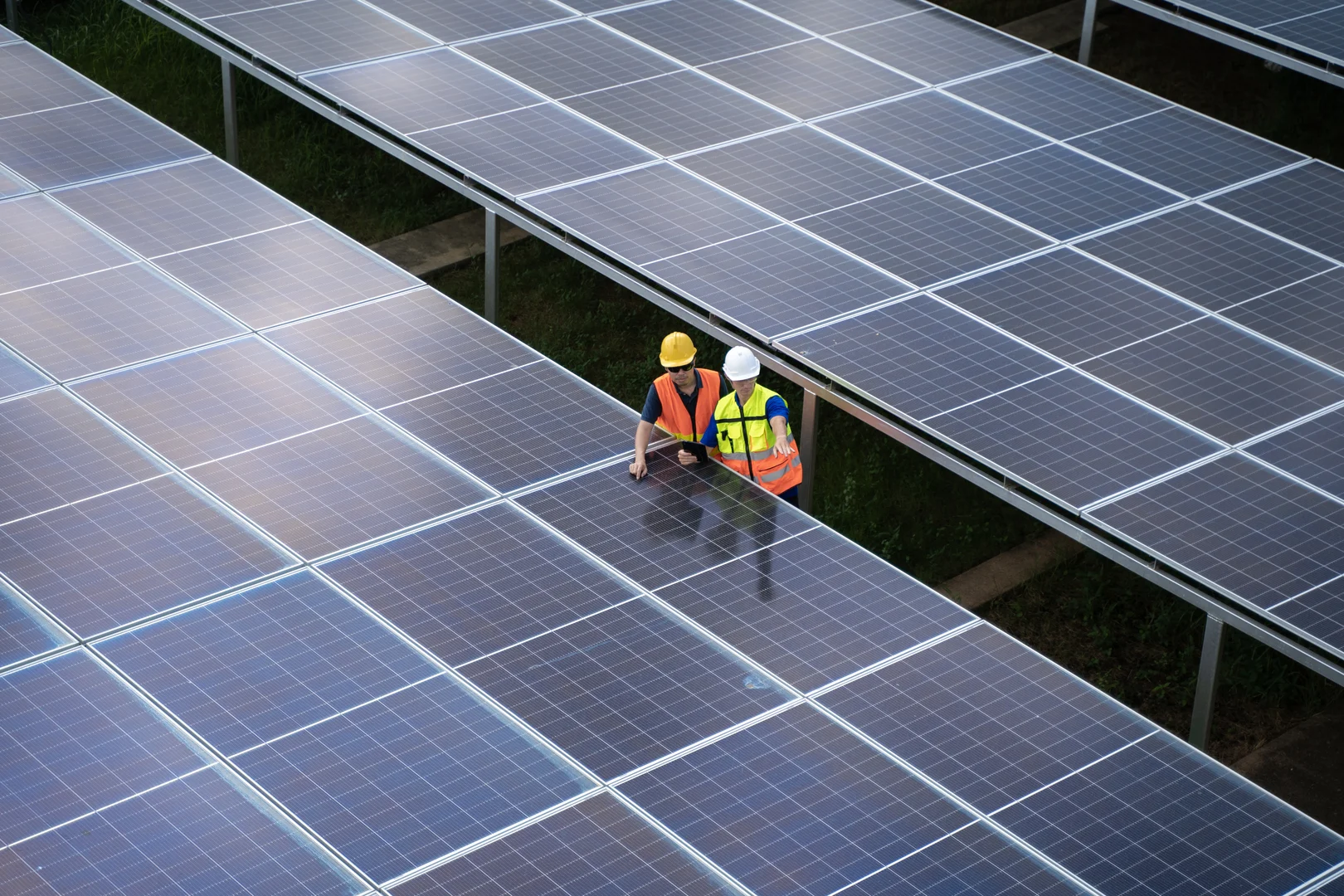
Buildings don’t need a complete overhaul to substantially reduce their carbon emissions. While major building infrastructure upgrades may be necessary in the long-term, digitalization is an effective step to modernize for efficiency while maximizing ROI.
Up to 45% of reduction with an ROI of less than 3 years
Our calculations have shown that deploying digital building and power management solutions in existing office buildings could reduce their operational carbon emissions by up to 45%, with an ROI of less than 3 years.
Up to 85% yield with an ROI of under 10 years
These solutions can be coupled with power factor correction, onsite renewables and battery energy storage to provide demand flexibility and improve resilience, yielding up to 85% operational carbon reduction with paybacks typically under 10 years.
This combination of efficiency, energy generation, and flexibility allows for buildings that not only consume less but consume better. They can help support the increasing energy demand on the grid, contributing not just to their own energy and carbon management efforts, but providing resilience to the system as a whole.
A science-based approach to retrofit planning
To better understand the best pathway to the best retrofit strategy for different building types, we partnered with JLL, global real estate professional services firm, to quantify the impact of various energy and carbon conservation measures, incorporating our own innovative technologies.
Discover the impact of different retrofit models
This research enabled us to prioritize actions, with more detail shown in the figure below. Each action is strategically ordered to maximize impact on carbon emissions while carefully balancing ease of implementation and ROI.


Light Interventions
For short-term holdings or leased spaces, light interventions are recommended. This involves deploying metering, monitoring, and modern building management technology for efficient operations. Doing this can reduce your operational carbon levels by up to 45%.
Medium Retrofits
Medium-term holdings offer the opportunity to go deeper. A medium retrofit is recommended by upgrading building equipment and installing renewables in addition to light intervention technologies. Now, your building could see an energy and operational carbon reduction of 45 – 85%.
Deep Renovations
For long-term ownership, a deep renovation is recommended. This involves addressing full electrification and building envelope improvements to position your asset at the forefront of the market.
Technologies are available to modernize for efficiency and maximize ROI
Choosing the right retrofit strategy to translate your ambition into action can be complex and overwhelming. Schneider Electric helps customers all over the world bridge ambition and action in their quest for energy efficiency, resiliency, and decarbonization by defining the right renovation strategy.
Schneider Electric has been named the Most Sustainable Company in the World for a second time in 2025 by Corporate Knights, and in 2024 and 2025 by Time Magazine / Statista.
Explore more
How GRESB is Shaping ESG Performance Across Global Real Assets
Weathering Economic Headwinds Through Sustainability
Ambition to Impact
Retrofitting Buildings for Sustainability

Need help?
Product Selector
Quickly and easily find the right products and accessories for your applications.
Get a Quote
Start your sales inquiry online and an expert will connect with you.
Where to buy?
Easily find the nearest Schneider Electric distributor in your location.
Help Center
Find support resources for all your needs, in one place.